









TOP ISSUE AREAS
Catholic educators fulfill the Church’s divine mission of evangelization by teaching and witnessing to the faith.
Catholic education is devoted to truth, embracing the unity of faith and reason and the integration of all knowledge.
Catholic education integrally forms the whole person in learning, activity, community, prayer, and Sacrament.
MEET SOME OF OUR EXPERTS
 Patrick Reilly
President and Founder
Patrick Reilly is the president and founder of The Cardinal Newman Society… Learn more
 Dr. Denise Donohue
Vice President for Educator Resources
Denise Donohue, Ed.D., is vice president for educator resources at The Cardinal Newman Society… Learn more
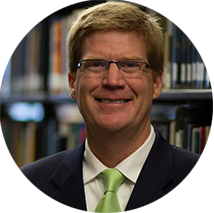 Dr. Dan Guernsey
Education Policy Editor and Senior Fellow
Dan Guernsey, Ed.D., is education policy editor and senior fellow of The Cardinal Newman Society… Learn more
RECOGNITION PROGRAMS
AREAS TO EXPLORE
Educator Resources
Our experts have developed resources for Catholic educators to help strengthen Catholic identity in Catholic schools and colleges.
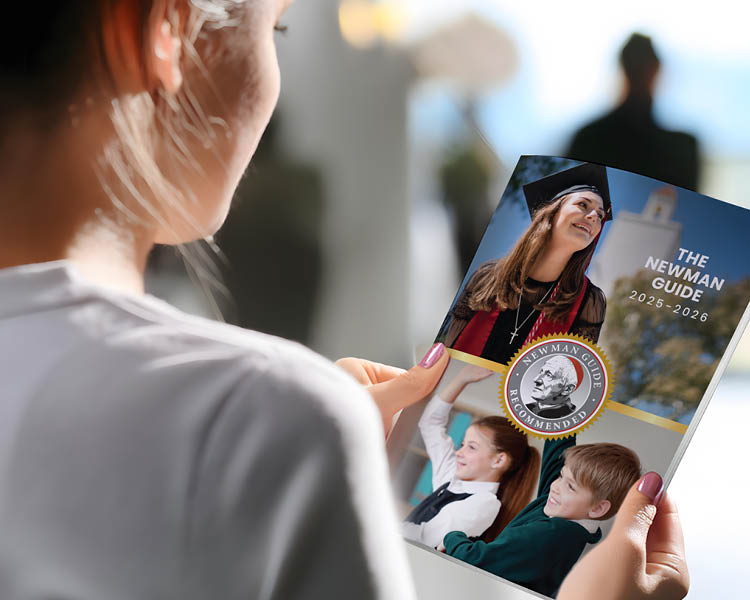
Newman Guide
The Newman Guide program helps Catholic families learn about faithful Catholic colleges and navigate the college search process.
News Room
Get our take on the latest in Catholic education! Listen to Newman Society staff on recent radio, podcast, and TV interviews and more.
Some Catholic Colleges Push ‘Pride’ Confusion, While Pope Leo Tells Them to Teach the Truth
/in Blog Latest, Newman Guide Articles/by Adam Cassandra“Big Gay Bingo.” “Fruity Party.” “Pride Movie Night.” These are all events promoted this June by DePaul University—the largest Catholic college in America—as part of its “Pride Month” celebration. DePaul’s LGBTQIA+ Resource Center is sponsoring these and other “pride” events for students on campus. The Center offers students resources such […]