








The Newman Guide to Choosing a Catholic CollegeThe Center for the Advancement of Catholic Higher EducationRENOVOThe Catholic Higher Education BlogThe Cardinal Newman Society"...a public conscience for Catholic higher education,"Father Matthew Lamb, Ave Maria University"...a voice crying out in the wilderness,"Father Benedict Groeschel, CFR"...simply one of the most effective Catholic apostolates in America,"Brian St. Paul, editor InsideCatholic.com
Pope John Paul IIEx Corde EcclesiaeThe Apostolic Constitution on Catholic UniversitiesAugust 15, 1990Fides et RatioSeptember 14, 1998Veritatis SplendorAugust 6, 1993Pope Benedict XVIAddress to Catholic Educators"First and foremost every Catholic educational institution is a place to encounter the living God who in Jesus Christ reveals his transforming love and truth."April 17, 2008Address at the Ecclesial Convention of the Diocese of Rome on the Theme: "Jesus Has Risen: Educating for Hope in Prayer, Action And Suffering""Thus we seek to respond to that 'educational emergency' which, for everyone, is a great and unavoidable challenge."June 9, 2008
Address to the Members of the Italian Episcopal Conference on the Occasion of the 58th General AssemblyMay 29, 2008
Letter to the Faithful of the Diocese and City of Rome on the Urgent Task of Educating Young PeopleJanuary 21, 2008Intended Lecture at the University of Rome "La Sapienza"January 17, 2008Address to the Members of the Regional Board of Lazio, Municipal Council of RomeJanuary 1, 2008USCCBCatholics in Political LifeUnited States Conference of Catholic Bishops"The Catholic community and Catholic institutions should not honor those who act in defiance of our fundamental moral principles. They should not be given awards, honors or platforms which would suggest support for their actions."2004
Timeline and Background of Ex corde EcclesiaeAugust 15, 2010, the 20th Anniversary of Ex corde Ecclesiae
What was going on in Catholic higher education before Ex corde Ecclesiae?In the 1967 “Land O’Lakes Statement,” several presidents of leading Catholic colleges and universities declared independence from all authority outside of the institution itself, including the Vatican and Catholic bishops. In the late 1960s and 1970s, most of the approximately 250 Catholic colleges in the U.S. legally separated from the Church, transferring ownership from their founding religious orders and dioceses to primarily lay boards of trustees. Driven by the desire to excel academically, gain social prestige and compete with secular institutions for taxpayer funding—all worthy goals in themselves—Catholic college leaders turned attention away from Catholic identity. Catholic colleges increasingly conformed to prevailing trends in American higher education: disintegration of coursework, minimal attention to students’ social and moral development, relativism, and disregard for religious truth. Professors and staff were hired without consideration of their support for the Catholic faith or the distinctive mission of Catholic higher education. The subsequent drift of Catholic colleges ushered in an era of theological dissent, moral confusion, unfamiliarity with the Catholic intellectual tradition, and rejection of the authority of the Vatican and bishops over Catholic doctrine, practice and identity. The 1986 dismissal of Father Charles Curran from the theology department at The Catholic University of America in Washington, D.C., drew worldwide attention to the problems in U.S. Catholic higher education. Father Curran was a prominent dissident from the encyclical Humane Vitae on sexual morality, and he was removed by then-Cardinal Joseph Ratzinger of the Vatican, who later became Pope Benedict XVI. Curran’s lawsuit against the university was unsuccessful.What is Ex corde Ecclesiae?On August 15, 1990, Pope John Paul II responded to the crisis in Catholic higher education by issuing the apostolic constitution on Catholic higher education, Ex corde Ecclesiae (From the Heart of the Church). An apostolic constitution has the binding effect of Church law; it is analogous to U.S. federal regulations to implement laws passed by Congress. Although the first major European universities were established with Catholic sponsorship or support, Ex corde was the Church’s first official document defining a Catholic college. The constitution’s guidelines for Catholic colleges include:
The American reaction to Ex corde was divided, with opposition from many leaders and faculty of leading Catholic universities who declared it “unworkable.” Recognizing the tension, the U.S. bishops in 1996 issued guidelines to implement Ex corde Ecclesiae in America, but with a pastoral approach that avoided strict mandates. The Cardinal Newman Society was a leading voice in support of clear guidelines as required by Ex corde Ecclesiae. The Vatican rejected the 1996 document, and the U.S. bishops continued their work under the leadership of Cardinal Anthony Bevilacqua of Philadelphia. The bishops approved clear guidelines in 1999 (subsequently approved by the Vatican), as well as recommended procedures for the theologians’ mandatum in 2000. While largely echoing Ex corde Ecclesiae, the U.S. bishops’ guidelines of 1999 added the expectations that the president and a majority of trustees at Catholic colleges should be Catholic, and the president should make an oath of fidelity to the Catholic faith upon assuming office.What has followed Ex corde Ecclesiae? Although there has been no formal, nationwide assessment of Catholic colleges’ adherence to Ex corde Ecclesiae, it can be safely stated that Ex corde Ecclesiae has not been fully and strictly implemented at most Catholic colleges in the U.S. The Cardinal Newman Society continues to report on scandalous activities and other concerns about Catholic identity. Nevertheless, there has been a hopeful and marked shift away from knee-jerk opposition to Ex corde Ecclesiae and toward strengthening Catholic identity throughout U.S. Catholic higher education. Certain high-profile scandals like pro-abortion commencement speakers and performances of The Vagina Monologues are declining. Meanwhile, a growing minority of Catholic colleges have fully embraced Ex corde Ecclesiae; many of these are new institutions established within the last 40 years. (Many are profiled in The Newman Guide to Choosing a Catholic College at TheNewmanGuide.com.) Among the most visible scandals is the problem of Catholic colleges choosing commencement speakers and honorary degree recipients who publicly oppose Catholic teaching on abortion, embryonic stem cell research, gay marriage, etc. In their 2004 statement “Catholics in Political Life,” the U.S. bishops mandated that “Catholic institutions should not honor those who act in defiance of our fundamental moral principles. They should not be given awards, honors or platforms which would suggest support for their actions.” In 2005 and again in 2007, Archbishop Michael Miller, then Vatican Secretary for the Congregation for Education, urged U.S. Catholic colleges to develop measurable “benchmarks” to measure their Catholicity. He also called for fidelity in Catholic theology departments, public disclosure of theologians who have the mandatum, and renewal of campus life consistent with Catholic morals. Most bishops have worked quietly to urge renewal of Catholic identity, but increasingly bishops are publicly airing frustration with some Catholic colleges. Recent examples include Archbishop Raymond Burke and Saint Louis University, now retired Bishop John D’Arcy and the U.S. bishops’ Doctrine Committee and the University of Notre Dame, Archbishop Jose Gomez and St. Mary’s University, and Bishop Robert McManus (chair of the U.S. Bishops’ Education Committee) and the College of the Holy Cross. In 2008 Pope Benedict XVI convened a meeting of the presidents of Catholic colleges and universities at The Catholic University of America in Washington, D.C. where he echoed key themes of Ex corde Ecclesiae on the importance of Catholic identity. The Holy Father has repeatedly expressed concern about an “educational emergency” in the West, and he followed upon this theme by noting a “crisis of truth” that is rooted in a “crisis of faith.” Pope Benedict reinforced his predecessor’s embrace of academic freedom “within the confines of the truth” (Ex corde Ecclesiae): “Yet it is also the case that any appeal to academic freedom in order to justify positions that contradict the faith and the teaching of the Church would obstruct or even betray the university’s identity and mission.” In 2009, 83 bishops publicly protested the University of Notre Dame’s choice to honor President Barack Obama with an honorary law doctorate and a prominent platform as commencement speaker, despite his aggressive support for abortion rights and embryonic stem cell research. Bishop John D’Arcy of Fort Wayne-South Bend boycotted the commencement ceremony and chastised the university, citing the 2004 U.S. bishops’ statement against Catholic honors for pro-abortion proponents. When the U.S. bishops convened for their summer meeting after the commencement ceremony, they issued a joint statement in support of Bishop D’Arcy’s actions regarding Notre Dame. In 2011, the U.S. bishops are scheduled to conduct a review of the implementation of Ex corde Ecclesiae over the past 10 years since the bishops’ American guidelines went into effect. Details for the review have not yet been released.
Patrick J. ReillyPresident & Founder, The Cardinal Newman Society In addition to founding and leading The Cardinal Newman Society for 17 years, Reilly has much experience with education issues. He has served as Executive Director of Citizens for Educational Freedom, higher education analyst for the U.S. House of Representatives education committee, and Program Analyst for the Postsecondary Division of the U.S. Department of Education. Reilly was an editor and research fellow at the Capital Research Center, a Washington, D.C. think tank that promotes responsible philanthropy and monitors nonprofit activity. He is a contributor to Mandate for Charity: Policy Proposals for the Bush Administration (Capital Research Center, 2001). From 1993 to 1995, he was a media consultant for the National Conference of Catholic Bishops. Reilly has written numerous articles on Catholic higher education and other education and Catholic issues for Catholic World Report, ZENIT, Legatus, Chronicle of Higher Education, The Wall Street Journal, The Washington Post, The Washington Times, Los Angeles Times and other publications, and he has appeared on FOX News, MSNBC, EWTN and numerous radio programs. He is co-editor of Newman’s Idea of a University: The American Response (Newman House Press, 2002) and The Newman Guide to Choosing a Catholic College (Cardinal Newman Society, 2009).
1967: Land O’Lakes StatementIn the “Land O’Lakes Statement,” presidents of leading Catholic colleges and universities declare independence from all authority outside of the institution itself, including the Catholic Church.1990: Ex corde EcclesiaePope John Paul II issues Ex corde Ecclesiae (From the Heart of the Church), an “apostolic constitution” which defines Catholic higher education and establishes guidelines for Catholic colleges and universities. The constitution reaffirms the authority of each local bishop over matters of Catholic identity and doctrine, and it requires that all official actions and commitments of a college or university must be in accord with the institution’s Catholic identity.1993: Cardinal Newman Society FoundedThe Cardinal Newman Society (CNS) is founded by alumni of Catholic colleges and universities to facilitate the implementation of Ex corde Ecclesiae and help renew and strengthen Catholic identity in Catholic higher education.1995: Accreditor Backs Off Abortion Training CNS and several other Christian and pro-life organizations fight proposed rules forcing graduate obstetrics-gynecology programs at Catholic and other medical schools to teach abortion and sterilization. CNS founder Patrick Reilly works with the U.S. House of Representatives education committee to organize hearings on the Accreditation Council of Graduate Medical Education (ACGME) guidelines. ACGME backs away from the guidelines, following Congressional hearings and opposition.1996: CNS Assists U.S. Bishops with Guidelines The U.S. bishops approve guidelines for Catholic colleges to implement Ex corde Ecclesiae, but without strong directives. The Vatican shares CNS concerns about the non-juridical approach and rejects the guidelines. CNS is invited to advise the bishops on the development of a new document.1999: U.S. Bishops Application of Ex corde Ecclesiae The U.S. bishops approve new guidelines—later accepted by the Vatican—that are much stronger and consistent with CNS proposals, including requirements that college presidents and a majority of faculty must be Catholic, theologians must receive a mandatum from the local bishop, and colleges must recognize the authority of the bishops over Catholic teaching and the colleges’ Catholic identity.1999: Commencement Scandals Protested Protests by the CNS Campus Speaker Monitoring Project and Philadelphia-area pro-life groups cause New York Times columnist Anna Quindlen to withdraw as Villanova University’s commencement speaker. Protests also encourage Bishop Daniel Reilly of Worcester, Mass., to boycott the commencement ceremony at Assumption College in Worcester, featuring pro-abortion Lt. Gov. Jane Swift of Massachusetts.2000: U.S. Guidelines for Mandatum The U.S. bishops approve guidelines for the mandatum, a requirement of Canon Law and Ex corde Ecclesiae by which Catholic theology professors must pledge to the local bishop that they will teach in conformity to Catholic doctrine. The bishops reject opposition from the Association of Catholic Colleges & Universities and associations of Catholic theologians. CNS publicly defends the bishops’ action and remains the nation’s leading proponent of strict enforcement of the mandatum.2003: Catholic College Student Survey CNS releases an eye-opening report commissioned from UCLA’s Higher Education Research Institute, showing that Catholic college graduates become significantly more pro-abortion and pro-gay marriage than when they were freshmen.2003: Bishops Boycott Commencement Ceremonies The CNS Campus Speaker Monitoring Project encouraged Worcester (Mass.) Bishop Daniel Reilly and Scranton (Penn.) Bishop James Timlin to boycott commencement ceremonies at the College of the Holy Cross and University of Scranton because pro-abortion MSNBC host Chris Matthews was commencement speaker at both institutions.2003: Marist College Abandons Catholic Mission In response to the CNS Campus Speaker Monitoring Project—in this case, opposing then-NY Attorney General Eliot Spitzer as a commencement speaker—Marist College declares itself no longer Catholic rather than endure inquiries from the Archbishop of New York. Marist College had, in fact, been minimally Catholic for a long time, but it was still officially recognized by the Archbishop as Catholic.2004: U.S. Bishops Policy on Honors, Platforms After 11 years of CNS protests of scandalous speakers and honorees at Catholic colleges, the U.S. bishops mandate in their statement “Catholics in Political Life” that “Catholic institutions should not honor those who act in defiance of our fundamental moral principles. They should not be given awards, honors or platforms which would suggest support for their actions.”2004: Campaign Against The Vagina Monologues CNS leads a nationwide protest against Catholic college performances of the vile play The Vagina Monologues with full-page ads in USA Today, National Catholic Register and The Washington Times national edition. By 2010, the campaign reduces Catholic campus performances to 14, from a high of 32 in 2003.2005: Bishops Boycott Commencement Ceremonies The CNS Campus Speaker Monitoring Project encourages Cardinal William Keeler of Baltimore and Archbishop Alfred Hughes of New Orleans to boycott commencement ceremonies at Loyola College of Maryland and Loyola University of New Orleans. The commencement speaker at Loyola was pro-abortion Rudolph Giuliani. One of the honorary degree recipients at Loyola was pro-abortion Sen. Mary Landrieu.2005: Marymount Manhattan College Abandons Catholic Mission In response to the CNS Campus Speaker Monitoring Project—in this case, opposing pro-abortion Sen. Hillary Clinton—Marymount Manhattan College declares itself no longer Catholic rather than endure inquiries from the Archbishop of New York. Marymount Manhattan College had, in fact, been minimally Catholic for a long time, but it was still officially recognized by the Archbishop as Catholic.2006: Pro-Abortion Website Referrals Removed Several Catholic universities—including Boston College, Georgetown University, Loyola University of New Orleans, Santa Clara University, and others—remove website referrals to pro-abortion organizations and clinics following CNS complaints.2007: Newman Guide to Choosing a Catholic College After two years of research and production, The Newman Guide to Choosing a Catholic College arrives at bookstores. The unique Guide identifies 20 Catholic colleges—about 10 percent of the Catholic colleges in the United States—plus one in Canada where students can reasonably expect a faithful Catholic education and a campus culture that generally upholds the values taught in their homes and parishes.2007: Commencement Speaker Scandals Decline The CNS Campus Speaker Monitoring Project and local protests lead Robert Wilhelm of the pro-abortion Girls Inc. to withdraw as commencement speaker at the College of St. Mary in Omaha, Neb. The Campus Speaker Monitoring Project has significant success, with the number of scandalous commencement speakers and honorees declining by nearly half, from 24 in 2006 to 13 in 2007.2007: Vatican Eucharistic Miracles Exhibit CNS is selected by the Real Presence Association as the national coordinator for displays of the Vatican’s International Exposition “The Eucharistic Miracles of the World” on Catholic and secular campuses across the country.2008: Pope Benedict XVI Addresses College Presidents Pope Benedict XVI reasserts key principles of Ex corde Ecclesiae while laying out a hopeful vision for Catholic education in his address to Catholic college presidents at The Catholic University of America. Soon afterward, CNS launches its research division, The Center for the Study of Catholic Higher Education, to study critical issues and advance “best practices” in Catholic higher education.2009: Notre Dame Commencement Scandal CNS leads a national protest of the University of Notre Dame’s invitation to President Obama to deliver the spring commencement address and receive an honorary law degree. More than 367,000 people sign the CNS petition against this at NotreDameScandal.com. Eighty-three Bishops protest Notre Dame’s action as a violation of the U.S. Bishops’ 2004 mandate on awards, honors or platforms at Catholic institutions.2009: Newman Guide Goes Online CNS launches the second edition of The Newman Guide to Choosing a Catholic College reaching out to many thousands of Catholic families and students interested in a faithful Catholic college education. This edition, which is also available as a free online resource at www.TheNewmanGuide.com, contains a new section on international and online Catholic institutions of higher education.2009: EEOC Ruling Against Belmont Abbey College The federal Equal Employment Opportunity Commission rules that Belmont Abbey College discriminates against women by refusing to cover birth control pills in its employee health insurance plan. CNS launches an effort to advise Catholic colleges how to protect religious liberty from government infringement in healthcare, student aid, etc.2010: Center for the Advancement of Catholic Higher Education Under the leadership of Dr. David B. House, former president of Saint Joseph’s College of Maine, CNS retools its research division as The Center for the Advancement of Higher Education with a new focus on advising and assisting academic and religious leaders in efforts to strengthen the Catholic identity and academic quality of Catholic colleges.2010: Beatification of John Henry Cardinal Newman CNS leads the Official U.S. Pilgrimage to England to Cardinal Newman’s Beatification by Pope Benedict XVI in September 2010. Newman authored the classic work The Idea of a University while founding a Catholic university in Ireland, and his writings were a major influence on Pope John Paul II and Ex corde Ecclesiae. The CNS Newman Legacy Project helps promote Newman’s work, especially as it relates to the unity of faith and reason and Catholic education. CNS partners with the Birmingham Oratory in England to preserve and protect more than 10,000 of Newman’s original manuscripts.
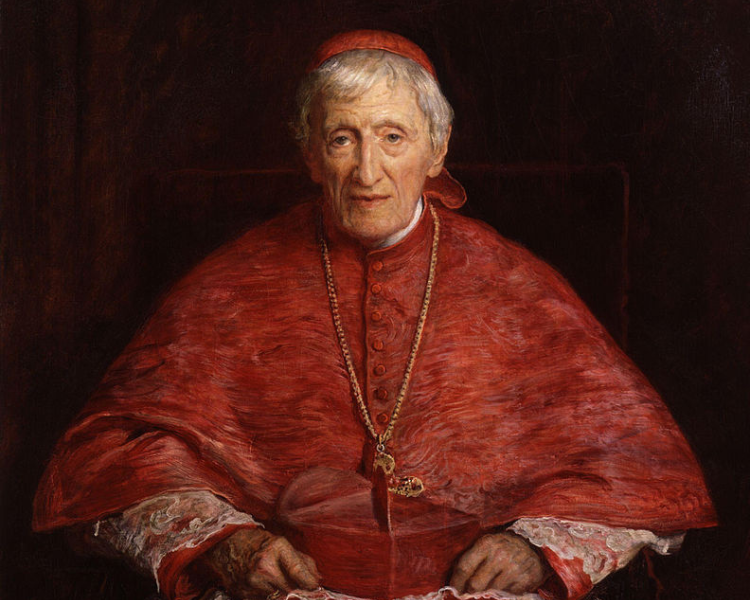
Founded in 1993, the mission of The Cardinal Newman Society (CNS) is to help renew and strengthen Catholic identity in Catholic higher education. CNS promotes awareness within the Catholic academic community of the nature and value of a truly Catholic university education and seeks the faithful implementation of Ex corde Ecclesiae. The Society is widely considered the leading advocate for higher education that is faithful to the teaching and tradition of the Catholic Church; a respected resource for research on developments and best practices in Catholic higher education; and a trusted adviser to students, alumni, trustees, campus officials, and faculty engaged in the reform or renewal of their campuses. The Society is a 501(c)(3) tax-exempt, nonprofit organization supported by more than 20,000 private individuals, corporations and foundations. CNS is home to the new Center for the Advancement of Catholic Higher Education which advises and assists academic and religious leaders in efforts to strengthen the Catholic identity and academic quality of Catholic colleges and universities. The Center’s Fellows produce original research on the most pressing issues facing Catholic higher education. The CNS Newman Legacy Project promotes the work of John Henry Cardinal Newman, who will be beatified by Pope Benedict XVI in September 2010. The Project is working with the Oratory of St. Philip Neri that Newman founded in Birmingham, England, to preserve and protect the archive of more than 10,000 of Newman’s original manuscripts. The Cardinal Newman Society publishes The Newman Guide to Choosing a Catholic College, a book and online resource that helps Catholic families appreciate and identify faithful Catholic colleges and universities. CNS operates a Campus Speaker Monitoring Project to support the U.S. bishops’ guidelines that prohibit Catholic institutions from providing honors or platforms to public opponents of Catholic teaching. Additionally, CNS promotes Eucharistic Adoration on college campuses and coordinates college displays of the Vatican’s International Exposition The Eucharistic Miracles of the World.CNS on the web:www.CardinalNewmanSociety.orgwww.TheNewmanGuide.comwww.CatholicHigherEd.orgMedia Contact: Adam WilsonDirector of Communications The Cardinal Newman Society 9415 West Street Manassas, Virginia 20110 703-367-0333 ext. 102 alert [ a t ] cardinalnewmansociety [ d o t ] org