








Overview
In 1876, Benedictine monks planted their roots in North Carolina, which was then the nation’s least Catholic state, and built the first and only abbey cathedral in the history of the United States. Partially as a result of the monks’ efforts and example, Roman Catholics are today the largest Christian body in the neighboring city of Charlotte.
The monks’ faith and perseverance remain evident at Belmont Abbey College, which is under the direct ownership of the Benedictine monastery. Today the College enjoys a dramatic increase in enrollment, an outstanding faculty, a quality core curriculum, and a national reputation for tenacity on behalf of Catholic principles.
In recent years, Belmont Abbey has championed religious liberty in disputes with the federal government. When the Equal Employment Opportunity Commission ruled that the College had to include coverage for contraception in its employee health insurance plan, the College’s leaders refused to compromise the College’s Catholic mission. In 2011, the College was the first of many religious organizations to sue the Obama administration over its health insurance mandate affecting both employees and students. President Bill Thierfelder has testified before Congress on religious freedom concerns.

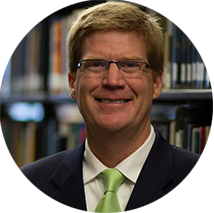
The leadership of Abbot Placid Solari, O.S.B., and Dr. Thierfelder has been inspiring. Abbot Solari has led the monastery since 1999, and is a former president and dean of the College. Dr. Thierfelder has been president since 2004, bringing a wide range of experiences as a businessman, sports psychologist, former college All-American high jumper, and Olympian.
“As a small community, we have an intentional focus of trying to have monks directly involved in the College,” said Abbot Solari. “The presence of the monks in the school is the best way to impart the image we want for the College.”
Belmont Abbey provides a strong witness to the Catholic faith, even though only about half the faculty are Catholic. The remainder are primarily Protestant and Evangelical Christians. The president and all the vice presidents are practicing Catholics.
The curriculum, policies, and leadership are all clearly directed toward a serious and authentically Catholic education. The recently revised core curriculum offers a thorough grounding in the liberal arts and Western thought. Campus life features frequent opportunities for the sacraments and prayer, single-sex residences, and a variety of activities including NCAA Division II athletics.
Academics
Fewer than half of the Abbey’s 1,700 students are of traditional college age; the rest are adults taking evening and weekend classes.
For traditional students, a new core curriculum was introduced in 2011, with heavy emphasis on the liberal arts, the Catholic intellectual tradition, and Western thought. Of the 120 credit hours required for graduation, 53 are in the core curriculum. Students become acclimated to Benedictine values through a First-Year Symposium and take required courses in rhetoric, logic, grammar, and writing; Western civilization; literary classics; political philosophy; scripture study; and theology.
Theology faculty members have received, or applied to, the local bishop for the mandatum, as is required by college policy, and the courses provide sound Catholic theology.
Belmont Abbey offers 14 majors, a balance between liberal arts and career-oriented programs. More than half the full-time students concentrate in business or education. Sports management is also a very popular major, in part because of the nearby NASCAR headquarters. The College has a reputation for its strong biology department, which has a 100 percent placement rate for graduates into medical, dental, and veterinary schools.

The Honors Institute has an emphasis on Great Books. In addition to the 15-course program, Honors students have the opportunity to attend an array of extracurricular lectures and programs, are eligible for generous grants, and travel to Rome during the summer between their junior and senior years.
The College also features the Felix Hintemeyer Catholic Leadership Program, which selects students who have earned exceptional academic records, a strong involvement in parish or Church activities, and evidence strong leadership qualities. Those selected receive a generous grant and travel to Rome in the summer after their junior year.
The Saint Thomas More Scholarship program provides scholars with a series of seminars, two public lectures, several social events each year, and an opportunity for a values-oriented internship.
Spiritual Life
Spiritual life at Belmont Abbey is centered at the historic Abbey Basilica of Mary, Help of Christians, constructed with financial support from St. Katharine Drexel. The brick structure features Bavarian painted-glass windows. A granite platform where slaves were once sold has been carved out as a baptismal font, with a plaque that reads: “Upon this rock, men once were sold into slavery. Now upon this rock, through the waters of baptism, men become free children of God.”
Three Masses are celebrated each weekend at the basilica—with the most popular being the 11 a.m. Sunday Mass. There’s one Mass on each weekday with confessions offered 30 minutes beforehand. There also are days of recollection and “fasting opportunities throughout the week. Students can join the monks for the Divine Office prayers of Lauds, Midday Prayer, and evening sung Vespers.
Across campus the Blessed Sacrament is exposed 16 hours a day in the St. Joseph Adoration Chapel. “I wanted this to be the first thing that we broke ground on,” Dr. Thierfelder told The Catholic News & Herald regarding the chapel’s construction in 2008, “because I thought that it communicated, more powerfully than I possibly could, what we actually value and what we think is at the core and root of Belmont Abbey College.” Mass is celebrated every Monday morning in the Blessed Sacrament Chapel. At various times, groups of men will pray for the female students, and groups of female students gather to pray the Rosary for the men on campus.

A Lourdes Grotto in the center of campus was dedicated in 1891 and has been given special status as a Pilgrimage Shrine for religious vocations. There is a special program of prayer each May.
Various monks rotate in the capacity of chaplain, but the separate two-person campus ministry oversees the Sunday evening, “student” Mass and various spiritual activities such as a G.K. Chesterton book club, the popular Movies with a Message series, retreats, Lenten and Advent penance services, and Stations of the Cross. A team of five missionaries with the Fellowship of Catholic University Students (FOCUS) leads nearly 200 students in Bible study.
Despite the large number of non-Catholic students, ministry activities are distinctly Catholic. For those who are not Catholic, the College provides an active R.C.I.A. program.
Residential Life
Campus housing accommodates about 625 students in seven residence halls, all of them single-gender. Another hundred students reside in off-campus apartments sublet by the College. The same rules apply to students living in the apartments as to those on campus. Overnight visitation by members of the opposite sex is prohibited. Students over 21 are allowed to possess and drink alcohol in moderation in the apartments for upper-class students, but only if no person under the age of 21 is present. Students under the age of 21 are not allowed to drink alcohol or even be in the presence of alcohol.
The “household” system was introduced to the College ten years ago, inviting students to form voluntary associations of residents to socialize and encourage spiritual growth. At present there are two households, one for men and another for women.
The residence halls recently went through a major renovation, bringing Internet access, electrical upgrades and new lighting. In 2012, the College completed a new 13,000-square foot, state-of-the-art dining center, doubling the capacity to 350. The former dining hall has been converted into a new 24-hour Student Center with recreation and game tables and space for studying and socializing. Student mailboxes and the campus post office are also located there. The Student Center is located in the midst of the residence halls and only 50 feet from freshman residences. Students also enjoy Holy Grounds Coffee Shop and Cafe, which has a piano and large-screen television, and The Catholic Shoppe, a religious book and goods store on campus.
The town of Belmont is quaint, with several boutiques, restaurants and shops and an old-fashioned hardware store—but also many new restaurants and retail businesses. It is 10 minutes west of Charlotte, which offers numerous activities and events. The Residence Life office often makes tickets available for concerts, sporting events, and theater. Charlotte is home to some of the nation’s largest banks and several museums, as well as NASCAR, the NFL, NBA, and the U.S. National Whitewater Olympic Training Center.
Students have access to a Wellness Center for routine medical issues. Gaston Memorial Hospital is located about eight miles west of the campus.
The Charlotte Douglas International Airport is an easy 10-minute drive from Belmont and is a major hub for U.S. Airways.
Student Activities
Students have access to about 30 student clubs and organizations. There is a student-run newspaper, The Crusader, and a literary magazine, Agora. The 128-year-old Abbey Players perform in the College’s historic Haid Theater and may be eligible for the Father John Oetgen, O.S.B., Excellence in Theatre Scholarship. Three sororities and two fraternities are also available. Greek life is committed to community service and the mission of the College, organized according to the Benedictine Hallmarks, and involved with FOCUS Bible study.
One popular student group is Crusaders for Life. Members help support the work of the maternity home, Room at the Inn; pray two Saturdays a month at a Charlotte abortion business; and organize and travel in buses to the annual March for Life in Washington, D.C.
Students enjoy concerts sponsored by the Arts at the Abbey series while earning “cultural events credits.” Belmont Abbey encourages all students to attend several cultural events each year.
Among the options available for community service are working with maternity homes or crisis pregnancy centers, helping needy and homeless people in the area, teaching religion to young people at local parishes, and mentoring and coaching at local schools.
President Thierfelder takes sports seriously, and the athletic director works directly under his supervision.
“I believe in the development of sport as one means of developing virtue,” says Dr. Thierfelder. “The athletic director’s role is to make certain that there isn’t a choice to be made between choosing sports or choosing a virtuous life.”

Belmont Abbey has 21 sports teams—19 varsity and two junior varsity. Of these, 11 men’s and nine women’s teams compete in NCAA Division II through the 12-team Conference Carolinas. The sports teams have enjoyed great success, at both the regional and national levels. There is an active intramural sports program.
The college’s athletic facilities include a fitness center, a basketball court, wrestling area with mats, a baseball stadium, and a softball, baseball, lacrosse, and soccer field. In addition to these amenities, students have free access to the Belmont YMCA facility, which features a weight room, cardio machines, basketball courts, a pool, and exercise classes. A new fitness center was opened this fall which everyone associated with the College can use approximately six to eight hours a day. Soccer, baseball, and softball fields are available on-campus. At the nearby U.S. National Whitewater Center and Olympic Training Center, students take advantage of the public park’s custom-made whitewater river.
The Bottom Line
Belmont Abbey College is a growing institution that has set an exciting course. After more than a century of providing a liberal arts education to students in the region, many of them not Catholic, the College is attracting Catholic students from around the country, highlighting its religious identity and educational mission.
“The campus is 130 years old,” a student commented. “It has a stability from the monks, yet there’s an excitement of growth. The college still feels young.”
And Belmont Abbey’s Catholic identity has a unique quality, since the College is a bastion of Benedictine spirituality in a largely Protestant region of the country. It is a college that offers much to Catholic students who choose to live out their faith, just as Belmont Abbey has chosen to live out its Catholic mission and Benedictine charism with resolve and enthusiasm.