








Overview
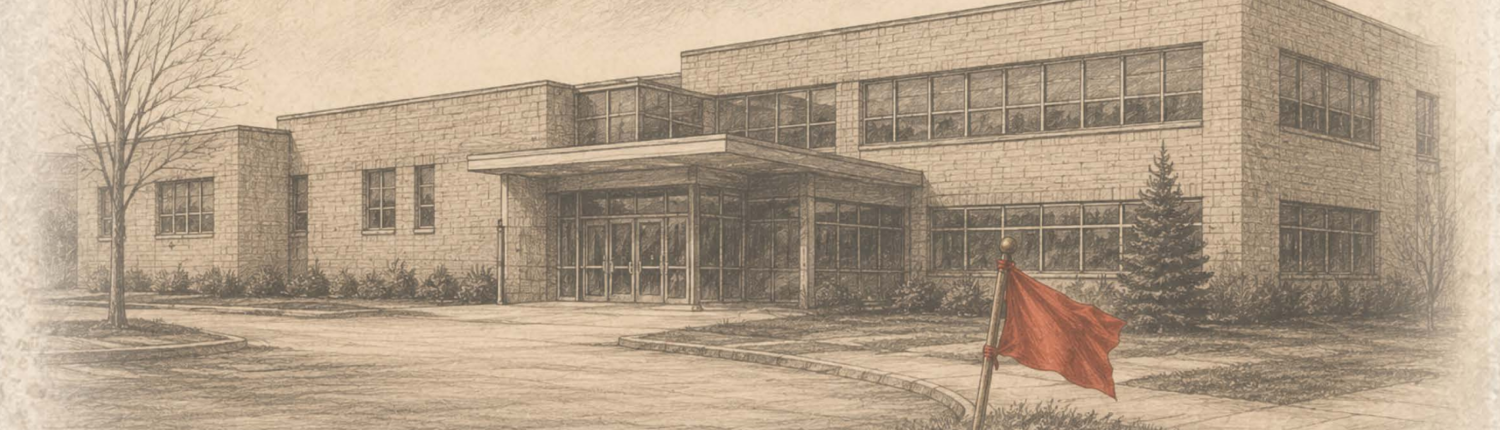
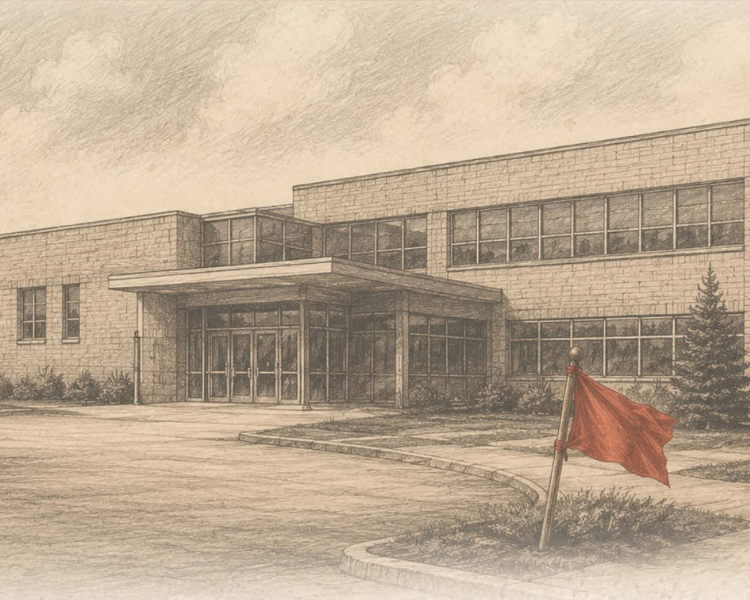
When one thinks of a traditional Catholic college, it’s not likely situated in a glass office building in a business park about 20 miles north of downtown San Diego, California. But no other Catholic college is quite like John Paul the Great Catholic University, and the setting is rather appropriate for this 21st century addition to Catholic higher education.
On a nice day, you might see small groups of students sitting on the lawn, reading or talking with one another. But look behind the doors, and you will find state-of-the-art technology and software to prepare students for futures in business, filmmaking, and other “new media,” with a firm grounding in the liberal arts and faithful Catholic theology. It’s a smart combination for the Church in today’s culture.
A first floor post-production studio is equipped with software and technology used in Hollywood filmmaking. A new sound stage, complete with camera equipment, lighting, and audio equipment allows students to shoot their productions. The first floor also offers a lounge where students can meet with prospective clients, some offices, and a theology library.
The second floor includes faculty offices, classrooms, conference rooms, a small library, and a classroom that transforms into a chapel for daily Mass at 11 a.m. Whereas most college bookshelves are filled with books, at John Paul the Great, you will also find shelves filled with movies.
Although it is situated in San Diego, the small, specialized University traces its heritage to Franciscan University of Steubenville, Ohio. While visiting there in 2000 with his daughter, President Derry Connolly had the inspiration to develop a college in his hometown.
“While at Franciscan, I saw students incredibly on fire for their faith. That wasn’t something I had experienced before,” said Connolly, who has worked as a professor and administrator at the University of California-San Diego for more than a decade. “The idea for John Paul the Great came to me while in front of the Blessed Sacrament. I wanted to try to connect the idea of students on fire for their faith with what I did day-to-day, teaching entrepreneurship to students at one of the top 20 schools in the U.S.”
The University offers undergraduate degrees in communications media and business, as well as an M.A. in biblical theology and an

M.B.A. in film producing. Undergraduates can specialize in film (screenwriting, producing, and production), animation and gaming, pre-theology and New Evangelization—the latter being something of a combination of new media, business, and theology. But undergraduates also take one course every quarter on some aspect of Catholic philosophy, theology, history, ethics, or culture. And unlike most colleges and universities, John Paul the Great’s academic calendar is year-round based on quarters, not semesters.
With more than 100 undergraduate students, nearly all of them Catholic, the University has long-range plans for a traditional campus with up to 1,200 students.
The University is governed by an 11-member board of trustees, chaired by a banker. The others include a priest and several area business leaders. Dr. Connolly, a native of Ireland, has a Ph.D. in applied mechanics from Cal-Tech, 15 years of employment with IBM and Kodak, and eight patents to his name.
JP Catholic is approved to operate by the state of California and is nearing the end of the lengthy eight-year process of seeking accreditation through the Western Association of Schools and Colleges.
A college education in upscale San Diego should be expensive, but JP Catholic is priced far below the average California college. Tuition and room fees for the 2012-13 academic year are $29,700. Financial aid includes merit scholarships, work-study options, and deferred loans through Wells Fargo Bank and Sallie Mae.
Academics
Although JP Catholic is not a liberal arts institution per se, it requires a 57-credit core curriculum. This includes four religious studies courses and four philosophy courses, such as Catholic Social Teaching and others that have a Catholic approach.
“We focus on balancing the core with a practical education so that you can apply what you’ve learned to a job,” said Dominic Iocco, dean of business and media at the University.
In many ways, the University combines the best of a college with the hands-on skill learning of a technical school. From their first days in class, students are able to use cameras and professional post-production software.
The University assumes that most students will be called to work in business, entertainment, and digital media. In the third and fourth years, students participate in teams to develop a Senior Business Plan, which allows them to bring their entrepreneurial skills and values together to create a blueprint for a company. The University expects that half of the students will use these plans to launch their own businesses after graduation.
Not only has JP Catholic established a niche, but the University already has a respectable track record of success with graduates in media, technology, and filmmaking. Some students created a feature film called Red Line, an online television series that attracted more than 125,000 site visitors and a great deal of press coverage. Several graduates and employees launched Yellow Line Studios, which

is involved in several film projects. The New Evangelization students produced a 13-episode series on the Catechism called “Pillars of Catholicism.”
JP Catholic is emphatic in ensuring fidelity to the Magisterium:
All teaching faculty will commit to harmony with Catholic Church teachings (the pope and bishops) in speech and action. Faculty, staff, students or volunteers who knowingly in public speech or actions take positions against the Catholic Church compromise their relationship with JP Catholic. JP Catholic expects all trustees, faculty and staff to celebrate the positive spiritual and entrepreneurial components of its mission and eschew cutting down what the institution is striving to build.
Overall, there are 24 faculty members and two visiting faculty. The mandatum is required for all professors of theology. To help keep the University’s budget small while also maintaining a practical emphasis, professors must be employed in part-time work in their field.
JP Catholic offers a brief study abroad program. Over a span of 19 days, students study in Ireland, France, and Italy.
Spiritual Life
Mass is offered each weekday on campus. The University has transformed a large classroom into a reverent chapel, outfitting it with icons, an altar, and a crucifix.
The campus chaplain is appointed by the San Diego bishop. He and other priests hear confessions four times per week and by appointment. Eucharistic Adoration takes place nearly every afternoon on campus, and students lead evening Rosary and the Chaplet of Divine Mercy at their residence apartments.
The local Good Shepherd Catholic Parish also offers Mass daily with weekend Masses in English, Spanish and Vietnamese.
Students have become involved in teaching CCD classes, doing pro-life work, helping with homeless people, and attending prayer and Sunday worship services.
Residential Life
About one-third of JP Catholic’s students commute from home, and the remainder live in two- and three-bedroom pre-furnished apartments at the Legacy Apartment Homes complex just about one mile from campus, spread through four different buildings. Men

and women reside in separate parts of the complex, and no apartment visits are permitted between them.
The University has adapted two apartments as common rooms, where students can study and socialize. A small chapel is available in one of the common rooms where students gather to pray the Liturgy of the Hours. The garage has been converted into a game room.
The luxury complex offers a state-of-the-art fitness room, two pools and a spa, a clubhouse with gourmet kitchen, barbecue grills, sand volleyball court, meeting space, and a movie theater that students can utilize. Nearby Miramar College has ball fields, tennis courts, a gym, and a pool available for common use.
The University does not offer a meal plan, so students are responsible for their own meals. Each apartment has its own kitchen, washer, and dryer. Students carpool, walk, or ride bicycles to class.
A resident director lives in the apartment complex and works with seven residential associates. Households—voluntary groups of students who support each other spiritually and socially, according to the Franciscan University of Steubenville model—are in formation.
Alcohol is not permitted on campus or in apartments, and the University encourages chastity by teaching scripture and writings of St. Francis de Sales. There are weekly get-togethers to talk about spiritual life, including chastity. Student dress can vary with some wearing t-shirts, sandals, and flip-flops, but in theology classes men are expected to wear collared shirts.
The northern suburb of San Diego includes an abundance of grocery and retail stores, banks, a pharmacy, and restaurants within close proximity of campus. Most of the retail stores are just blocks away from the apartment complex where students reside. Many students have been able to find part-time employment close by.
With a population of about 1.3 million, San Diego presents a broad array of economic, social, and cultural opportunities. The diversified economy includes military and port facilities, tourism, biotechnology, marine science, and many start-up businesses, particularly in technology. Cultural offerings include the San Diego Museum of Art, the San Diego Zoo, and a wide range of professional sports teams.
San Diego is one of the safest large cities in the nation, but students need to avoid crossing the nearby Mexican border. In addition to the San Diego International Airport, Amtrak and other rail and public bus systems are available.
Student Activities
JP Catholic continues to develop student organizations, with clubs dedicated to anime illustration, animation, pro-life activities,

business, and classic movies. There is a writing group and a student choir, and a ballroom dance club and acting club alternate on Friday evenings.
The University has established some sports clubs, such as hiking, climbing, and soccer.
In addition to the local parish-centered activities, there are informal events such as a monthly “open mic” or variety program. Student government sponsors two or three events each quarter, such as dances, movies, and excursions to the Pacific beaches about 20 miles away.
Students also venture into San Diego for the many social, cultural, film festival, and athletic opportunities available there.
The Bottom Line
John Paul the Great Catholic University is part of the new breed of small Catholic institutions that have responded to the crisis in Catholic higher education with a renewed commitment to faithful theology and philosophy.
But JP Catholic is also uniquely modern, preparing students for 21st-century careers in business and media technology while retaining a traditional liberal arts core. The University has found a special niche among Catholic colleges, one that will appeal to a particular student with a love for entrepreneurship, digital media, and evangelization.
The University offers Catholic families three very attractive components: a strong Catholic identity, a complete yet specialized curriculum, and a location in one of the most livable and appealing cities in the country.